Species guide
Plums
19 plum varieties with cited chill-hour, zone, and pollination data. Most need a pollination partner.
Variety catalog
- Aldermanchill —zones 3–8needs partner
Burgundy-red skin; golden yellow, sweet and juicy flesh
- Beauty~250 chill hrs (Figure from a nursery catalog; no extension-published value.)zones —self-fertile
- Blue Damson~800 chill hrs (Figure from a nursery catalog; no extension-published value.)zones —self-fertile
- Burgundy~300 chill hrs (Figure from a nursery catalog; no extension-published value.)zones 5–9 (Figure from a nursery catalog; no extension-published value.)self-fertile
- Dapple Dandy400–500 chill hrs (Figure from a nursery catalog; no extension-published value.)zones 5–10 (Figure from a nursery catalog; no extension-published value.)needs partner
- Elephant Heart~500 chill hrs (Figure from a nursery catalog; no extension-published value.)zones —needs partner
- Flavor Grenade300–400 chill hrs (Figure from a nursery catalog; no extension-published value.)zones —needs partner
- Flavor King~400 chill hrs (Figure from a nursery catalog; no extension-published value.)zones —needs partner
- Flavor Supreme700–800 chill hrs (Figure from a nursery catalog; no extension-published value.)zones —needs partner
- French Improved Prune~800 chill hrs (Figure from a nursery catalog; no extension-published value.)zones —self-fertile
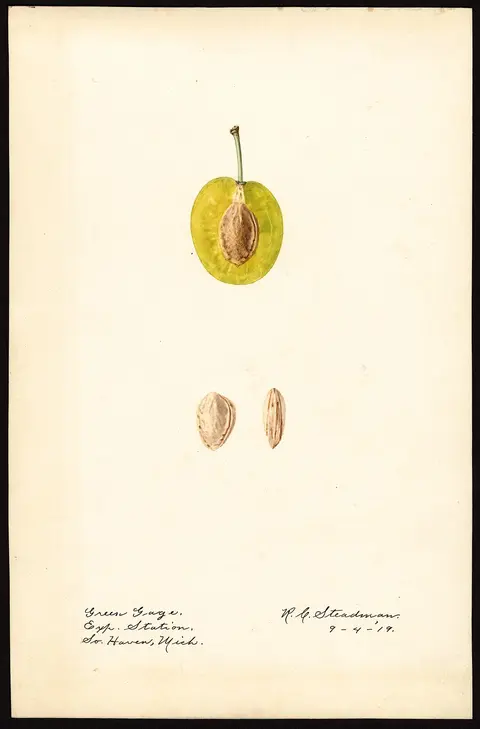
- Green Gage~700 chill hrs (Figure from a nursery catalog; no extension-published value.)zones —self-fertile
- Italian Prune~800 chill hrs (Figure from a nursery catalog; no extension-published value.)zones 4–9 (Figure from a nursery catalog; no extension-published value.)self-fertile
- Methley~250 chill hrs (Figure from a nursery catalog; no extension-published value.)zones 5–9 (Figure from a nursery catalog; no extension-published value.)self-fertile
- Santa Rosa~300 chill hrs (Figure from a nursery catalog; no extension-published value.)zones —self-fertile
- Satsuma~300 chill hrs (Figure from a nursery catalog; no extension-published value.)zones —needs partner
- Shiro400–500 chill hrs (Figure from a nursery catalog; no extension-published value.)zones 5–9 (Figure from a nursery catalog; no extension-published value.)self-fertile
- Stanley~800 chill hrs (Figure from a nursery catalog; no extension-published value.)zones 4–9 (Figure from a nursery catalog; no extension-published value.)self-fertile
- Superiorchill —zones 4–8needs partner
Large fruit with dark red, russet-dotted skin
- Tokachill —zones —needs partner
(est.) marks our clearly-labeled estimate where no source publishes a figure (hover for the basis); dashed badges cite nursery catalogs rather than extension sources; “—” means nobody publishes that figure for the variety.
Growing plums: the basics
Plums are among the more reliable stone fruits for a backyard, though most kinds need a compatible partner nearby and all bloom early enough to be at the mercy of a late frost.
Sun & site
Plums need full sun to produce the most fruit. Because they bloom early in spring, avoid low pockets where cold air and frost settle — a single cold night during bloom can cost the whole season's crop.
Soil
Plums grow in most soils as long as drainage is sufficient; they have little tolerance for wet, heavy ground and are prone to root problems there. When planting, don't over-enrich the backfill — keep at least half of the mix original soil so roots grow out into the surrounding ground rather than circling in a rich pocket.
Pollination & spacing
Most plums need a second, compatible variety blooming at the same time to set a good crop. Note that European and Japanese types generally can't pollinate each other, so match your partner to the type you're planting. Space trees roughly twelve to twenty feet apart, accounting for a mature spread as wide as the tree is tall.
Watering & first years
Keep the soil around young trees moist but not wet through their first season. Established trees do best on deep, infrequent watering that soaks a foot or two down, rather than frequent shallow sprinklings.
Planting
Plant bare-root trees in early spring while dormant; potted trees can go in after the danger of frost has passed. Dig the hole two to three times as wide as the root ball at the same depth, and for bare-root trees keep the graft union a couple of inches above the soil line.
Where this guide comes from
This growing guide is drawn from the university-extension sources below.
- University of Minnesota Extension. Growing stone fruits in the home garden — accessed July 2026
- Utah State University Extension. How to Grow Plums in Your Home Garden — accessed July 2026
Plan the year
Month-by-month plum care, anchored to each zone’s typical frost dates: