Species guide
Citrus
16 citrus varieties with cited chill-hour, zone, and pollination data. Most are self-fertile.
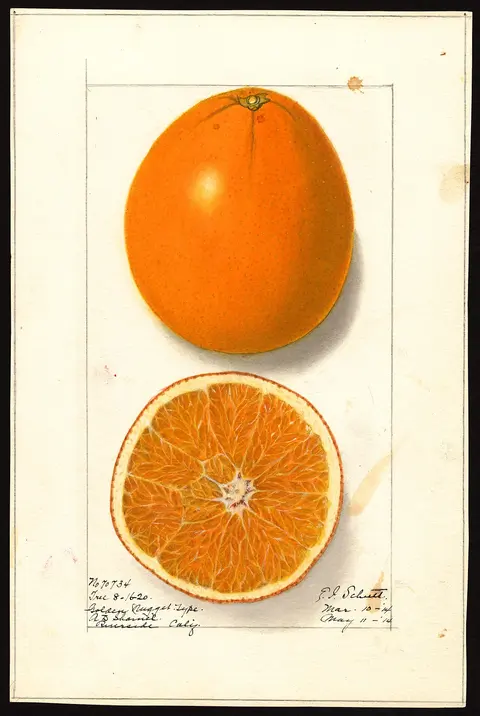
Variety catalog
- Bearss Limeno chill neededzones 8–11 (Figure from a nursery catalog; no extension-published value.)self-fertile
- Calamondinno chill neededzones —self-fertile
- Cara Carano chill neededzones —self-fertile
- Clementineno chill neededzones —needs partner
- Eureka Lemonno chill neededzones 8–11 (Figure from a nursery catalog; no extension-published value.)self-fertile
- Improved Meyer Lemonno chill neededzones 8–11 (Figure from a nursery catalog; no extension-published value.)self-fertile
- Key Limeno chill neededzones 8–11 (Figure from a nursery catalog; no extension-published value.)self-fertile
- Kumquat Nagamino chill neededzones —self-fertile
- Murcottno chill neededzones —pollination —
- Owari Satsumano chill neededzones —self-fertile
- Ponkanno chill neededzones —pollination —
- Ruby Red Grapefruitno chill neededzones —self-fertile
- Satsuma Mandarinno chill neededzones —self-fertile
- Tangono chill neededzones —pollination —
- Valencia Orangeno chill neededzones —self-fertile
- Washington Navel Orangeno chill neededzones —self-fertile
(est.) marks our clearly-labeled estimate where no source publishes a figure (hover for the basis); dashed badges cite nursery catalogs rather than extension sources; “—” means nobody publishes that figure for the variety.
Growing citrus: the basics
Citrus are evergreen, subtropical trees best suited to frost-free areas, and because most varieties are self-fertile, a single well-sited tree can crop — with container culture opening the door in colder regions.
Sun & site
Citrus need full sunlight for maximum productivity, and any well-drained homesite suitable for a garden is generally fine for a tree. As a subtropical crop, citrus does best in areas that don't regularly experience freezing weather; in historically cold locations, favor hardier types and avoid tender varieties whose late fruit may freeze before it matures.
Soil
Citrus grows on a range of soils as long as drainage is good. Check soil pH before planting — a range of about 5.5 to 6.5 is preferred — and keep trees away from septic tanks and drain fields, where roots can cause problems.
Spacing & pollination
Most citrus varieties are self-fertile, so a single tree will bear; a few, such as some mandarins and tangelos, set better with a compatible pollenizer nearby. Allow a minimum of about 15 feet between trees so lower branches aren't shaded out as the canopy fills.
Watering & first years
New plantings need consistent moisture while they establish: soak the root zone thoroughly and water regularly, then taper the frequency as the root system develops. Even soaking around the tree keeps the young root ball from drying out.
Planting & frost siting
Container-grown nursery trees can be planted at most times of year; set them at the same depth as the original container. For freeze protection when siting, avoid low-lying areas where cold air settles. In cold regions, growing citrus in pots is a common approach so trees can be moved to shelter before freezes.
Where this guide comes from
This growing guide is drawn from the university-extension sources below.
- University of Florida IFAS Extension. Citrus Culture in the Home Landscape (HS132) — accessed July 2026
- University of Florida IFAS Gardening Solutions. Citrus — accessed July 2026
Plan the year
Month-by-month citrus care, anchored to each zone’s typical frost dates: