Species guide
Persimmons
8 persimmon varieties with cited chill-hour, zone, and pollination data. Most are self-fertile.
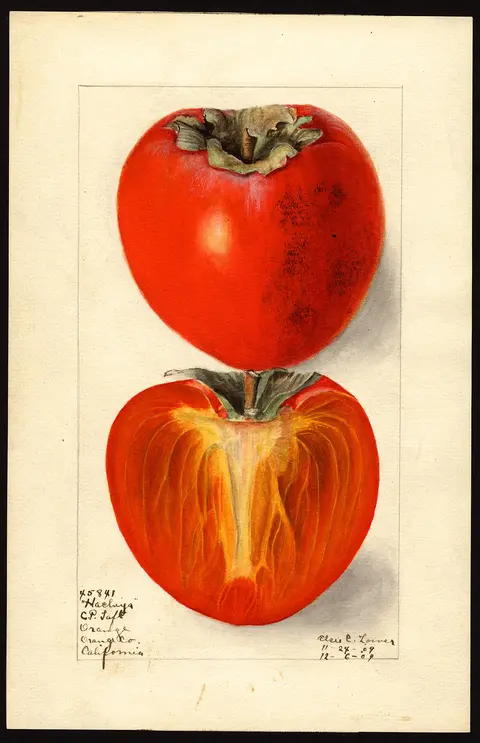
Variety catalog
- Fuyu~200 chill hrs (Figure from a nursery catalog; no extension-published value.)zones 7–10 (Figure from a nursery catalog; no extension-published value.)self-fertile
- Hachiya~200 chill hrs (Figure from a nursery catalog; no extension-published value.)zones —self-fertile
- Ichi-Ki-Kei-Jirochill —zones —self-fertile
- Jiro~200 chill hrs (Figure from a nursery catalog; no extension-published value.)zones 8–11 (Figure from a nursery catalog; no extension-published value.)self-fertile
- Meaderchill —zones 5–9 (Figure from a nursery catalog; no extension-published value.)self-fertile
- Prokchill —zones 5–8 (Figure from a nursery catalog; no extension-published value.)self-fertile
- Saijo~200 chill hrs (Figure from a nursery catalog; no extension-published value.)zones 7–9 (Figure from a nursery catalog; no extension-published value.)self-fertile
- Tanenashichill —zones —self-fertile
Cone-shaped orange fruit, seedless
(est.) marks our clearly-labeled estimate where no source publishes a figure (hover for the basis); dashed badges cite nursery catalogs rather than extension sources; “—” means nobody publishes that figure for the variety.
Growing persimmons: the basics
Persimmons come in two main types — the native American persimmon and the Asian (Japanese) persimmon — and knowing which you're growing shapes how you handle pollination and siting.
Sun & site
Persimmons grow best in ample sunlight, though they carry some tolerance for shade. American persimmon is notably cold-hardy, while Asian types are more tender, so match the type to your climate when choosing a site.
Soil
Plant in moderately well-draining, slightly acidic soil. Persimmons develop a deep taproot, so a deep planting site suits them and helps mature trees ride out dry spells once established.
Pollination & spacing
Pollination differs by type. Asian persimmons are commonly self-fruiting, so a single tree can crop, though a pollination partner often gives more regular, abundant harvests. American persimmons frequently need a pollinizer — planting two cultivars with similar flowering and maturity dates helps ensure fruit set unless you've chosen a self-fruitful selection. Give each tree room to reach its mature size.
Watering & first years
Water young trees regularly through their first few years to establish healthy growth. Once mature, the deep taproot makes persimmons fairly drought tolerant, so the greatest need for supplemental water is early on.
Planting
Because of that deep taproot, persimmons can be difficult to transplant once established, so choose the planting site carefully and set the tree out while it is young. A well-chosen permanent spot avoids the setback of moving the tree later.
Where this guide comes from
This growing guide is drawn from the university-extension sources below.
- University of Illinois Extension. Diversify your orchard: Grow persimmons for a holiday season harvest — accessed July 2026
Plan the year
Month-by-month persimmon care, anchored to each zone’s typical frost dates: