Species guide
Apples
60 apple varieties with cited chill-hour, zone, and pollination data. Most need a pollination partner.
Variety catalog
- Acey Mac800–1,000 chill hrs (est.) (Bred for and grown in high-chill temperate regions; extension sources publish hardiness but no chill figure. Typical of high-chill apples (roughly 800-1,000 hours).)zones 4–8needs partner
- Akane~800 chill hrs (Figure from a nursery catalog; no extension-published value.)zones 4–8needs partner
- Anna~300 chill hrszones 5–10 (Figure from a nursery catalog; no extension-published value.)needs partner
Resembles Red Delicious with about half red blush; medium-large fruit
- Arkansas Black500–600 chill hrs (Figure from a nursery catalog; no extension-published value.)zones 4–8needs partner
- Baldwin800–1,000 chill hrs (est.) (Bred for and grown in high-chill temperate regions; extension sources publish hardiness but no chill figure. Typical of high-chill apples (roughly 800-1,000 hours).)zones —needs partner
- Beacon800–1,000 chill hrs (est.) (Bred for and grown in high-chill temperate regions; extension sources publish hardiness but no chill figure. Typical of high-chill apples (roughly 800-1,000 hours).)zones —needs partner
Bright red apple with soft, juicy flesh
- Braeburn~700 chill hrs (Figure from a nursery catalog; no extension-published value.)zones 5–8needs partner
- Cameo800–1,000 chill hrs (est.) (Bred for and grown in high-chill temperate regions; extension sources publish hardiness but no chill figure. Typical of high-chill apples (roughly 800-1,000 hours).)zones 5–8needs partner
- CandyCrisp800–1,000 chill hrs (est.) (Bred for and grown in high-chill temperate regions; extension sources publish hardiness but no chill figure. Typical of high-chill apples (roughly 800-1,000 hours).)zones 5–8needs partner
- Chestnut Crab800–1,000 chill hrs (est.) (Bred for and grown in high-chill temperate regions; extension sources publish hardiness but no chill figure. Typical of high-chill apples (roughly 800-1,000 hours).)zones 3–4needs partner
Large crabapple with russet skin; rich, intense, nutty flavor
- Cortland~800 chill hrs (Figure from a nursery catalog; no extension-published value.)zones 4–7needs partner
Medium red apple; sweet-tart white flesh, slow to brown when cut
- Cox's Orange Pippin~800 chill hrs (Figure from a nursery catalog; no extension-published value.)zones 4–8 (Figure from a nursery catalog; no extension-published value.)needs partner
- CrimsonCrisp800–1,000 chill hrs (est.) (Bred for and grown in high-chill temperate regions; extension sources publish hardiness but no chill figure. Typical of high-chill apples (roughly 800-1,000 hours).)zones 4–7needs partner
- Dorsett Golden~250 chill hrszones 5–10 (Figure from a nursery catalog; no extension-published value.)needs partner
Golden skin with a light red blush; firm flesh
- Earligold800–1,000 chill hrs (est.) (Bred for and grown in high-chill temperate regions; extension sources publish hardiness but no chill figure. Typical of high-chill apples (roughly 800-1,000 hours).)zones 4–7needs partner
- Empire~800 chill hrs (Figure from a nursery catalog; no extension-published value.)zones 4–8needs partner
- Enterprise800–1,000 chill hrs (est.) (Bred for and grown in high-chill temperate regions; extension sources publish hardiness but no chill figure. Typical of high-chill apples (roughly 800-1,000 hours).)zones —needs partner
- Fireside800–1,000 chill hrs (est.) (Bred for and grown in high-chill temperate regions; extension sources publish hardiness but no chill figure. Typical of high-chill apples (roughly 800-1,000 hours).)zones —needs partner
Very large, red-striped; sweet, fine-grained flesh
- First Kiss800–1,000 chill hrs (est.) (Bred for and grown in high-chill temperate regions; extension sources publish hardiness but no chill figure. Typical of high-chill apples (roughly 800-1,000 hours).)zone 4needs partner
Deeply colored red; extraordinarily juicy, spritely tart
- Fortune800–1,000 chill hrs (est.) (Bred for and grown in high-chill temperate regions; extension sources publish hardiness but no chill figure. Typical of high-chill apples (roughly 800-1,000 hours).)zones 5–8needs partner
- Frostbite800–1,000 chill hrs (est.) (Bred for and grown in high-chill temperate regions; extension sources publish hardiness but no chill figure. Typical of high-chill apples (roughly 800-1,000 hours).)zones 3–4needs partner
Small, striped maroon-red and gold; intensely sweet, firm and juicy
- Fuji400–500 chill hrs (Figure from a nursery catalog; no extension-published value.)zones 4–8needs partner
- Gala400–500 chill hrs (Figure from a nursery catalog; no extension-published value.)zones 4–8needs partner
Large, red over a yellow background; crisp with a mild sweet-tart flavor
- Ginger Gold800–1,000 chill hrs (est.) (Bred for and grown in high-chill temperate regions; extension sources publish hardiness but no chill figure. Typical of high-chill apples (roughly 800-1,000 hours).)zones 4–8needs partner
- GoldRush800–1,000 chill hrs (est.) (Bred for and grown in high-chill temperate regions; extension sources publish hardiness but no chill figure. Typical of high-chill apples (roughly 800-1,000 hours).)zones 4–8needs partner
- Golden Delicious600–700 chill hrs (Figure from a nursery catalog; no extension-published value.)zones 4–8self-fertile
- Golden Supreme800–1,000 chill hrs (est.) (Bred for and grown in high-chill temperate regions; extension sources publish hardiness but no chill figure. Typical of high-chill apples (roughly 800-1,000 hours).)zones 4–8needs partner
- Granny Smith~400 chill hrs (Figure from a nursery catalog; no extension-published value.)zones 5–8needs partner
- Gravenstein~700 chill hrs (Figure from a nursery catalog; no extension-published value.)zones 2–9 (Figure from a nursery catalog; no extension-published value.)needs partner
- Haralson800–1,000 chill hrs (Figure from a nursery catalog; no extension-published value.)zones 3–4needs partner
Medium, striped red; firm flesh with a complex tart flavor
- Honeycrisp800–1,000 chill hrszones 3–7needs partner
Medium-large, dappled red; extremely juicy and crisp
- Honeygold800–1,000 chill hrs (est.) (Bred for and grown in high-chill temperate regions; extension sources publish hardiness but no chill figure. Typical of high-chill apples (roughly 800-1,000 hours).)zones 3–4needs partner
Medium, golden to yellow-green; crisp, juicy and sweet
- Idared800–1,000 chill hrs (est.) (Bred for and grown in high-chill temperate regions; extension sources publish hardiness but no chill figure. Typical of high-chill apples (roughly 800-1,000 hours).)zones 4–6needs partner
- Jonagold700–800 chill hrs (Figure from a nursery catalog; no extension-published value.)zones 4–8needs partner
- Jonamac800–1,000 chill hrs (est.) (Bred for and grown in high-chill temperate regions; extension sources publish hardiness but no chill figure. Typical of high-chill apples (roughly 800-1,000 hours).)zones 4–8needs partner
- Jonathan700–800 chill hrs (Figure from a nursery catalog; no extension-published value.)zones 4–8needs partner
- Liberty~800 chill hrs (Figure from a nursery catalog; no extension-published value.)zones 4–8 (Figure from a nursery catalog; no extension-published value.)needs partner
Medium, McIntosh-like with firmer flesh
- Lodi800–1,000 chill hrs (est.) (Bred for and grown in high-chill temperate regions; extension sources publish hardiness but no chill figure. Typical of high-chill apples (roughly 800-1,000 hours).)zones 3–7needs partner
- Macoun800–1,000 chill hrs (est.) (Bred for and grown in high-chill temperate regions; extension sources publish hardiness but no chill figure. Typical of high-chill apples (roughly 800-1,000 hours).)zones —needs partner
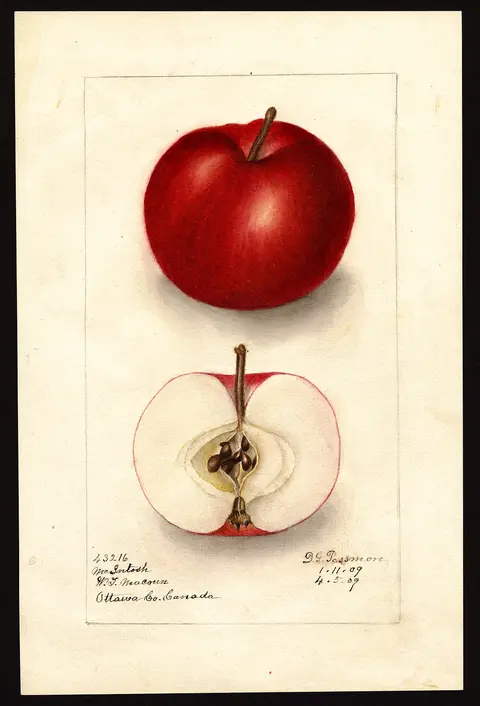
- McIntosh~900 chill hrs (Figure from a nursery catalog; no extension-published value.)zones 5–8needs partner
- Mutsu~500 chill hrs (Figure from a nursery catalog; no extension-published value.)zones 5–9needs partner
- Northern Spy800–1,000 chill hrs (est.) (Bred for and grown in high-chill temperate regions; extension sources publish hardiness but no chill figure. Typical of high-chill apples (roughly 800-1,000 hours).)zones 4–8needs partner
- Paula Red800–1,000 chill hrs (est.) (Bred for and grown in high-chill temperate regions; extension sources publish hardiness but no chill figure. Typical of high-chill apples (roughly 800-1,000 hours).)zones 4–8needs partner
- Pink Lady300–400 chill hrs (Figure from a nursery catalog; no extension-published value.)zones 6–9 (Figure from a nursery catalog; no extension-published value.)needs partner
- Prima800–1,000 chill hrs (est.) (Bred for and grown in high-chill temperate regions; extension sources publish hardiness but no chill figure. Typical of high-chill apples (roughly 800-1,000 hours).)zones 4–7needs partner
- Red Delicious700–800 chill hrs (Figure from a nursery catalog; no extension-published value.)zones 4–8needs partner
- Rome Beauty~1,000 chill hrs (Figure from a nursery catalog; no extension-published value.)zones 5–8needs partner
- Sansa800–1,000 chill hrs (est.) (Bred for and grown in high-chill temperate regions; extension sources publish hardiness but no chill figure. Typical of high-chill apples (roughly 800-1,000 hours).)zones 5–7needs partner
- SnowSweet800–1,000 chill hrs (est.) (Bred for and grown in high-chill temperate regions; extension sources publish hardiness but no chill figure. Typical of high-chill apples (roughly 800-1,000 hours).)zones 4–6needs partner
Large, bronze-red blushed fruit; low-acid, sweet flavor
- Spartan800–1,000 chill hrs (Figure from a nursery catalog; no extension-published value.)zones 4–8 (Figure from a nursery catalog; no extension-published value.)needs partner
- State Fair800–1,000 chill hrs (est.) (Bred for and grown in high-chill temperate regions; extension sources publish hardiness but no chill figure. Typical of high-chill apples (roughly 800-1,000 hours).)zones —needs partner
Striped red; juicy and moderately tart
- Stayman800–1,000 chill hrs (est.) (Bred for and grown in high-chill temperate regions; extension sources publish hardiness but no chill figure. Typical of high-chill apples (roughly 800-1,000 hours).)zones 5–8needs partner
- Suncrisp800–1,000 chill hrs (est.) (Bred for and grown in high-chill temperate regions; extension sources publish hardiness but no chill figure. Typical of high-chill apples (roughly 800-1,000 hours).)zones 4–7needs partner
- Sweet Sixteen800–1,000 chill hrs (est.) (Bred for and grown in high-chill temperate regions; extension sources publish hardiness but no chill figure. Typical of high-chill apples (roughly 800-1,000 hours).)zones 3–7needs partner
Medium to large, striped and washed rosy red; crisp and juicy
- Topaz800–1,000 chill hrs (est.) (Bred for and grown in high-chill temperate regions; extension sources publish hardiness but no chill figure. Typical of high-chill apples (roughly 800-1,000 hours).)zones 4–8needs partner
- TropicSweet~300 chill hrszones —needs partner
Sweet, firm fruit with about 30% red blush
- Wealthy800–1,000 chill hrs (Figure from a nursery catalog; no extension-published value.)zones 2–8 (Figure from a nursery catalog; no extension-published value.)needs partner
Medium-sized red apple; juicy, slightly acidic
- Winesap~800 chill hrs (Figure from a nursery catalog; no extension-published value.)zones 5–8needs partner
- Yellow Transparent800–1,000 chill hrs (Figure from a nursery catalog; no extension-published value.)zones 3–8needs partner
- Zestar800–1,000 chill hrs (est.) (Bred for and grown in high-chill temperate regions; extension sources publish hardiness but no chill figure. Typical of high-chill apples (roughly 800-1,000 hours).)zones 3–6needs partner
Large, crunchy and juicy red fruit; balanced sweet-tart flavor
(est.) marks our clearly-labeled estimate where no source publishes a figure (hover for the basis); dashed badges cite nursery catalogs rather than extension sources; “—” means nobody publishes that figure for the variety.
Growing apples: the basics
Apples are among the most rewarding backyard fruit trees, but a little planning up front — site, spacing, and a pollination partner — makes all the difference to your crop.
Sun & site
Give apples full sun — at least eight hours a day. A spot with good air movement helps foliage dry quickly after rain, which reduces disease pressure. Avoid low pockets where cold air and frost settle, since a late frost during bloom can cost you the crop.
Soil
Apples do best in deep, well-drained soil and won't tolerate wet feet — standing water leads to root problems. A slightly acidic to neutral soil pH suits them well. It's worth testing your soil before planting so you can correct pH and fertility ahead of time rather than after the tree is in the ground.
Pollination & spacing
Most apples need a second, different variety blooming at the same time to set a full crop, so plan to plant at least two compatible varieties. Spacing depends on the rootstock: dwarf trees can go as close as a few metres apart, while semi-dwarf and standard trees need progressively more room. Give each tree enough space for light to reach all its branches.
Watering & first years
Water newly planted trees regularly through their first couple of growing seasons while the roots establish, especially in dry spells. Keep a weed- and grass-free circle around the trunk so the young tree isn't competing for water and nutrients, and mulch to conserve moisture — just keep the mulch back from the trunk itself.
Planting
Plant while the tree is dormant. Set it at the same depth it grew in the nursery and keep the graft union above the soil line so the scion variety doesn't root. Fill in, water well to settle the soil around the roots, and stake if the site is windy.
Where this guide comes from
This growing guide is drawn from the university-extension sources below.
- University of Minnesota Extension. Growing apples in the home garden — accessed July 2026
Plan the year
Month-by-month apple care, anchored to each zone’s typical frost dates: