Citrus variety
Satsuma Mandarin
Also known as Satsuma
The short answer
Satsuma Mandarin is self-fertile[1]. The sourced figures are below — where nothing is published we say so, and any estimate is clearly labeled as ours.
Growing facts
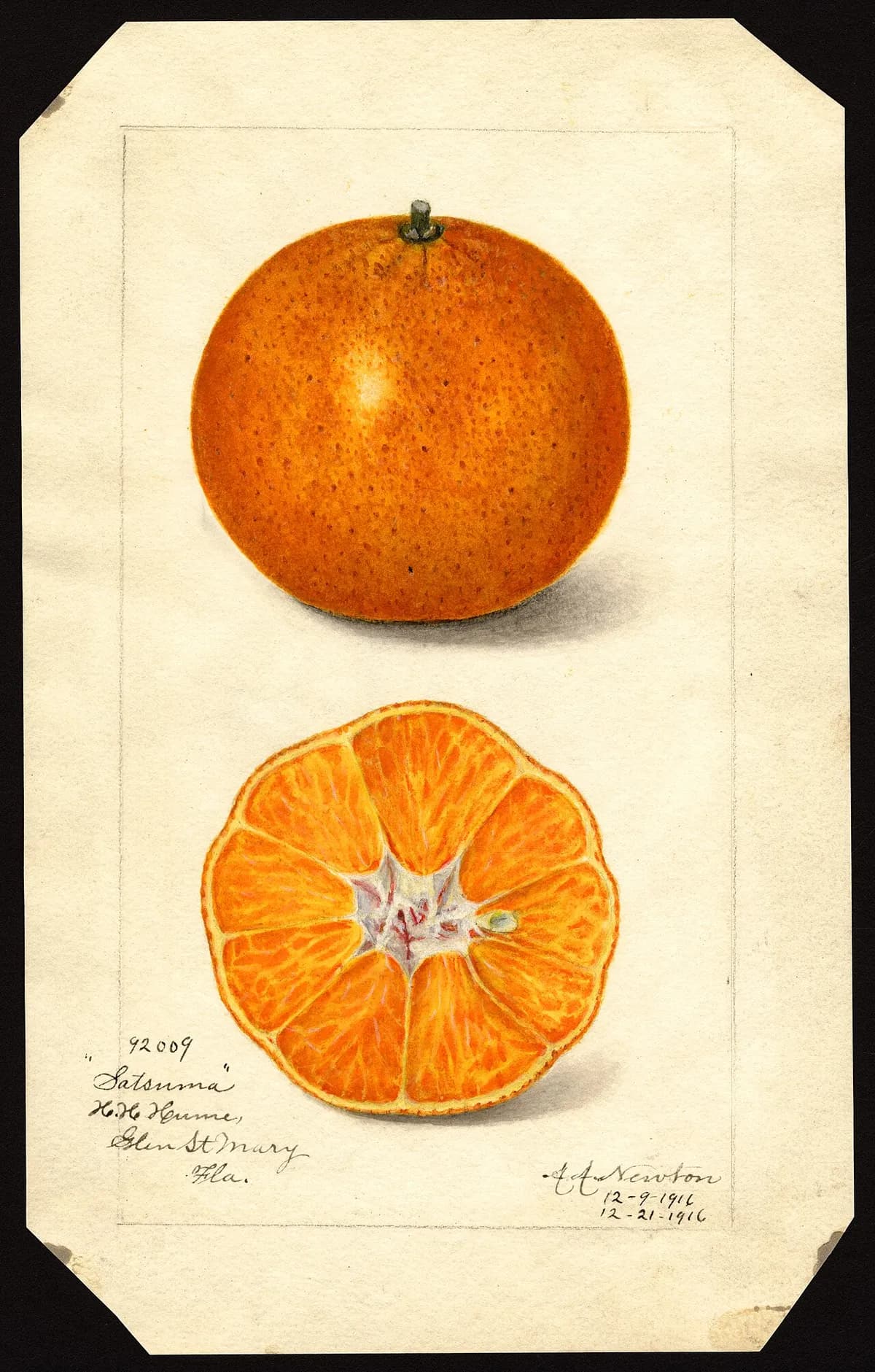
Plate provenance[2]
Notes
A year with your Satsuma Mandarin
When the work happens for a citrus in USDA zone 6, anchored to typical frost dates.
| Task | J | F | M | A | M | J | J | A | S | O | N | D |
|---|---|---|---|---|---|---|---|---|---|---|---|---|
| Prune | — | — | — | — | — | — | — | — | — | — | ||
| Spray timing | — | — | — | — | — | — | — | — | — | |||
| Harvest | — | — | — | — | — | — | — | — | — | — | — | — |
| Care | — | — | — | — | — |
Growing a Satsuma Mandarin? Get its care calendar for your exact ZIP code, with email reminders.
Save this tree in My OrchardQuestions
- Is Satsuma Mandarin self-pollinating?
- Satsuma Mandarin is self-fertile, though a pollination partner can improve cropping.
Sources
- [1] Texas A&M AgriLife Extension (Aggie Horticulture). Table 1. Characteristics of common Texas citrus varieties — accessed July 2026
- [2] USDA National Agricultural Library. USDA Pomological Watercolor Collection (Rare and Special Collections, 1886-1942) — accessed July 2026
- [3] University of Florida IFAS Extension (Gardening Solutions). Cold-Hardy Citrus — accessed July 2026
- [4] Texas A&M AgriLife Extension (Aggie Horticulture). Citrus — Fruit & Nut Resources fact sheet — accessed July 2026